ENG
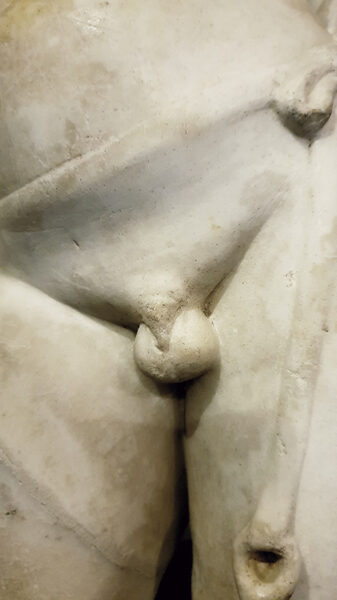
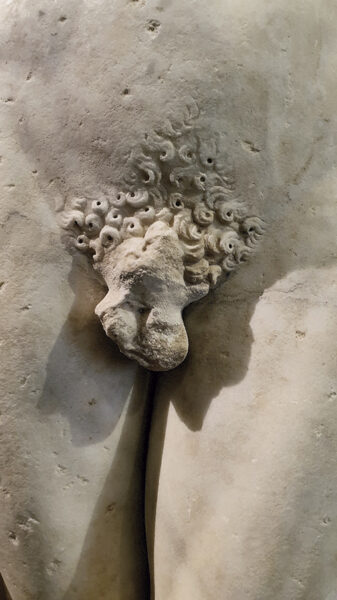
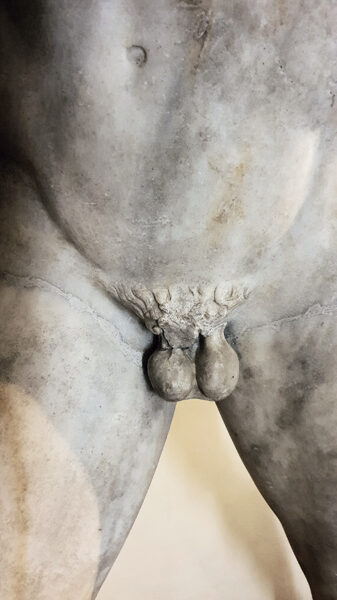
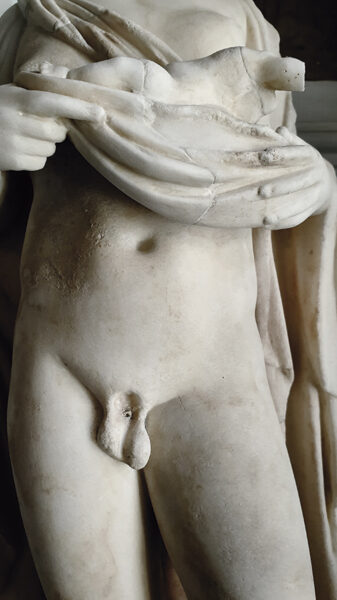
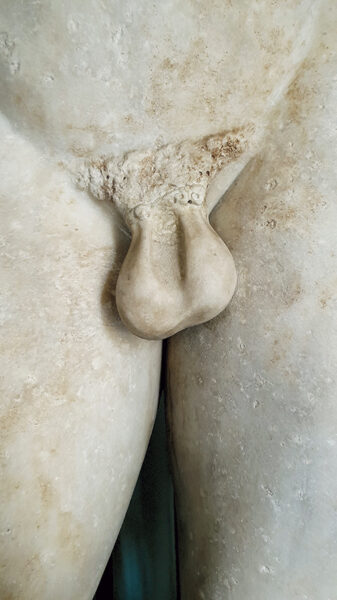
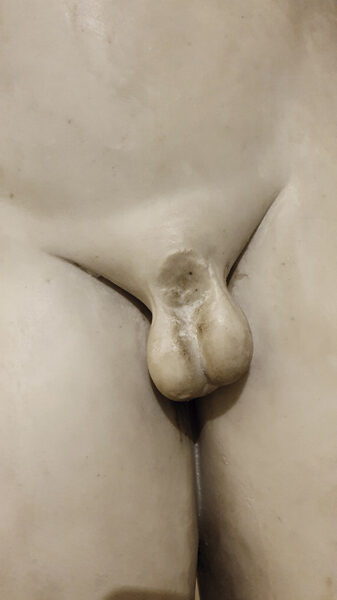
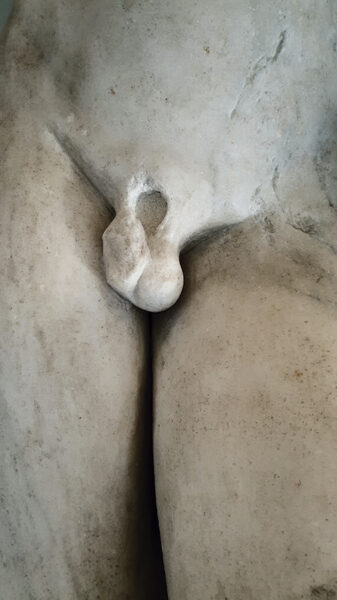
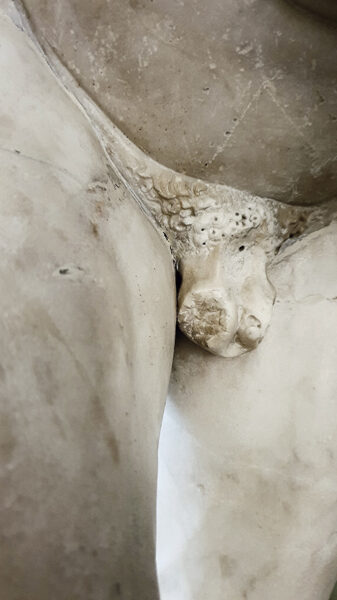
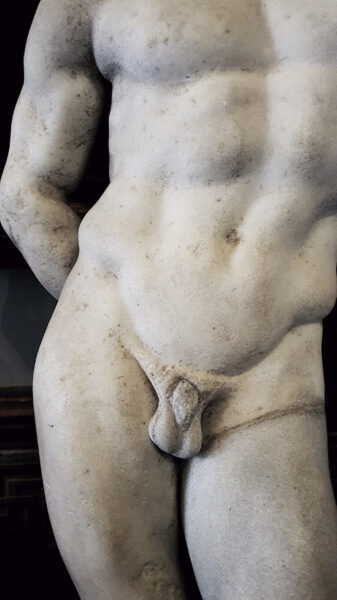
The classical statues of Rome are an important cultural legacy that reflects the society’s vision of that time. These sculptures represented the canon of beauty of the era, which remains valid 2000 years later. Most of these sculptures are male figures with muscular and perfectly sculpted bodies. However, despite these sculptures being considered as a model of aesthetic perfection, it is common to find them with the penis, among other appendages, broken or severed.
This mutilation in the sculptures has been attributed to various causes, among which stand out the action of time and the deliberate destruction of male genitalia by Christians in the 4th century. The breaking of male genitals in ancient sculptures would have been motivated by a combination of religious, moral, cultural, and political factors. Therefore, these mutilated statues provide an opportunity to reflect on gender and identity.
Gender is a social construction based on the assignment of roles, characteristics, and behavioral expectations to people based on their anatomy. This binary dichotomy is based on the idea that there is a male gender and a female gender, and that these are opposites and immutable. However, this dichotomy is questioned by all queer theory and refers to the existence of other forms of gender identity that do not fit the traditional binary categories attributed to the genitalia.
These classical statues of Rome, despite representing male figures, show us that gender is not a fixed and immutable category. The absence of the male sexual organ in these statues leads us to question whether these figures still represent that idealized masculinity that patriarchal society has attributed. Is it possible that these statues represent an unconscious form of expression of non-binary identity?
The mutilation of sexual organs in these statues also leads us to reflect on the relationship between gender identity and genitalia. The fact that these statues can be considered as a form of expression of non-binary identity calls into question the idea that gender identity is defined exclusively by the presence or absence of certain sexual organs.
Non-binary is a gender identity that challenges traditional gender roles and expectations, and seeks to include all gender identities that are outside the masculine-feminine dichotomy.
This visual essay is titled ORNAMENTO to convey the idea that, as in the statues, genitals beyond their physiological functions are nothing more than an ornament, like any other part of the body when it comes to determining a person’s gender and sexuality.
ESP
Las estatuas clásicas de Roma son un importante legado cultural que reflejan la visión de la sociedad de aquel tiempo. Estas esculturas representaban el canon de belleza de la época, canon que sigue vigente 2000 años después. En su mayoría, estas esculturas son figuras masculinas con cuerpos musculosos y perfectamente esculpidos. Sin embargo, a pesar de que estas estatuas han sido consideradas como un modelo de perfección estética, es común encontrarlas con el pene, entre otros apéndices, roto o cercenado.
Esta mutilación en las estatuas ha sido atribuida a diversas causas, entre las que destacan la acción del tiempo y la destrucción deliberada de los órganos sexuales masculinos por parte de los cristianos en el siglo IV. La rotura de los genitales masculinos en las esculturas antiguas habría sido motivada por una combinación de factores religiosos, morales, culturales y políticos. Por todo ello, estas estatuas mutiladas brindan una oportunidad para reflexionar sobre el género y la identidad.
El género es una construcción social que se basa en la asignación de roles, características y expectativas de comportamiento a las personas en función de su anatomía. Esta dicotomía binaria se basa en la idea de que existe un género masculino y un género femenino, y que estos son opuestos e inmutables. Sin embargo, esta dicotomía se ve cuestionada por toda la teoría queer y se refiere a la existencia de otras formas de identidad de género que no se ajustan a las categorías binarias tradicionales atribuidas a lo genital.
Estas estatuas clásicas de Roma, a pesar de representar figuras masculinas, nos muestran que el género no es una categoría fija e inmutable. La ausencia del órgano sexual masculino en estas estatuas, nos lleva a cuestionar si estas figuras siguen representando esa masculinidad idealizada que se ha atribuido la sociedad patriarcal. ¿Es posible que estas estatuas representen una forma inconsciente de expresión de lo no binairo?
La mutilación de los órganos sexuales en estas estatuas también nos lleva a reflexionar sobre la relación entre la identidad de género y la genitalidad. El hecho de que estas estatuas puedan ser consideradas como una forma de expresión del no binarismo, pone en cuestión la idea de que la identidad de género se define exclusivamente por la presencia o ausencia de ciertos órganos sexuales.
El no binarismo es una identidad de género que desafía los roles y expectativas de género tradicionales, y que busca la inclusión de todas las identidades de género que se encuentran fuera de la dicotomía masculino-femenino.
Este ensayo visual lleva por título ORNAMENTO para dar a entender que, como en las estatuas, los genitales más allá de sus funciones fisiológicas no son más que un ornamento como podría ser cualquier otra parte del cuerpo a la hora de determinar el genero y la sexualidad de una persona.